When a fermentation system fails to reach the desired temperature, the output emits a pungent ammonia odor, or the decomposition results vary significantly between batches, the first instinct is often to blame the equipment. However, in most cases, the problem lies in an earlier stage: the carbon-to-nitrogen ratio (C/N) of the feedstock is not properly balanced.
The carbon-to-nitrogen ratio is one of the most fundamental yet most easily overlooked parameters in aerobic fermentation. This article uses several data tables to help you establish a scientific set of feed standards for livestock and poultry manure processing.
The carbon-to-nitrogen ratio (C/N) is the ratio of the mass of carbon to the mass of nitrogen present in a given material. In aerobic fermentation, carbon serves as an energy source for microorganisms, while nitrogen is used to synthesise their own proteins. The balance between the two directly affects microbial activity, which determines the rate of temperature increase, the uniformity of decomposition and the quality of the end product.
Although this logic represents one of the most fundamental chemical principles in livestock manure processing, many farms have not yet incorporated it into their standardised manure management processes. Consequently, the quality of each batch of input material depends on subjective judgement rather than data-driven decision-making.
The optimal initial C/N ratio for aerobic composting is 25:1 to 30:1. This range is also listed as the recommended value in the Chinese agricultural industry standard NY/T 3442-2019, “Technical Specifications for Livestock and Poultry Manure Composting”.

However, the above C/N standards primarily apply to traditional open-air composting. Due to their forced ventilation and precise temperature control capabilities, enclosed composting machines have a wider actual tolerance range for raw material C/N ratios.
Upon completion of fermentation, the C/N ratio of the finished compost naturally decreases. During aerobic fermentation, carbon is consumed in large quantities as carbon dioxide, while nitrogen becomes relatively concentrated. The final C/N ratio typically drops to 15:1–20:1—which is precisely the range suitable for direct application to farmland, without causing soil nitrogen fixation or crop burn.
For raw materials with a severely low C/N ratio, such as swine manure, as well as wet chicken manure with excessively high moisture content, high-carbon additives must be mixed in before feeding the material into the manure processing equipment to raise the overall C/N ratio to a reasonable range. This is the core operation of the “feed blending” stage in manure management.

The logic for estimating the C/N ratio of a mixture is straightforward: multiply the weight of each material by its corresponding C/N value, sum these values, and then divide by the total weight to obtain the estimated C/N ratio of the mixture. No specialized instruments are required; preliminary designs for livestock manure treatment plans can be completed using reference data for raw materials.
Knowing the numbers is not enough; more importantly, one must be able to identify specific signs of C/N imbalance during the fermentation process—this is an essential judgment skill required for daily operations.
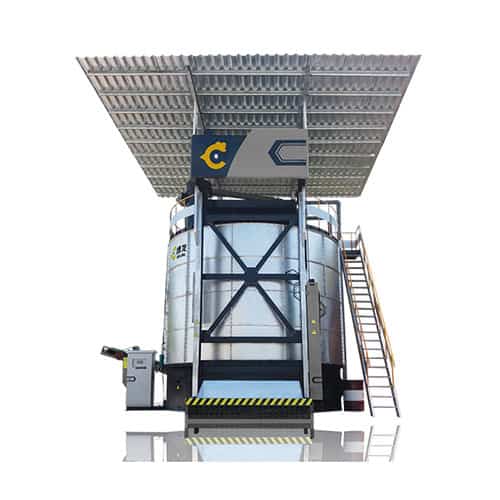
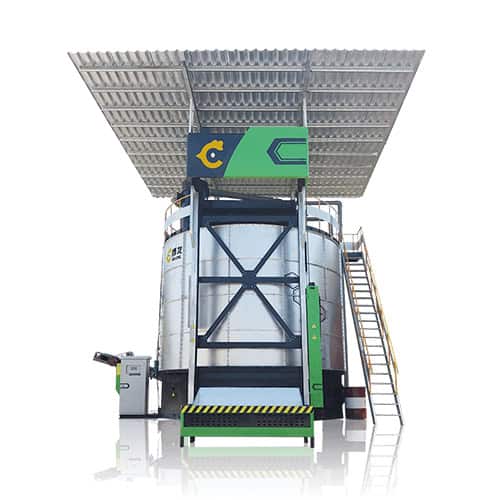
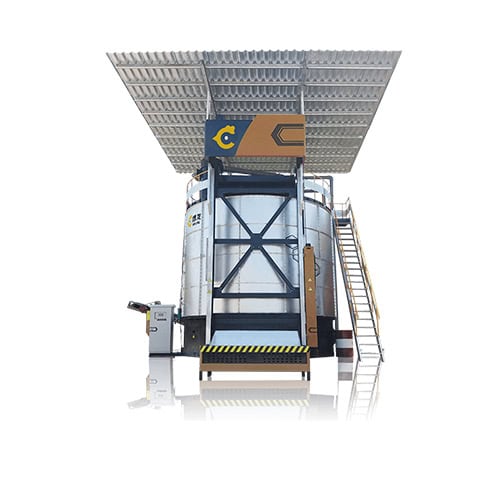
Taking chicken manure as an example, if processed using traditional open-air composting, one inevitably faces problems such as massive ammonia volatilization and severe nitrogen loss. However, the Bolong closed aerobic composting machine offers a distinct advantage when processing chicken manure: as long as the moisture content of the chicken manure is kept below 65%, it can be fed directly into the machine without the need for additives. The equipment’s forced ventilation and mixing systems will compensate for deviations in the carbon-to-nitrogen ratio, ensuring thorough decomposition while effectively controlling ammonia volatilization.
Of course, if the moisture content of the chicken manure is too high, it is still recommended to first dewater it or add high-carbon bulking agents for pretreatment before feeding it into the equipment, as this will yield more stable results.
When properly proportioned materials are fed into the livestock manure composting machine, the temperature typically rises naturally to above 55°C within 48 to 72 hours, and the temperature curve remains stable throughout the entire fermentation cycle. The insulated design of the sealed tank is crucial for maintaining this temperature range—it prevents the temperature inconsistencies caused by surface heat loss commonly seen in open-air composting.

Temperature rise is slow, and in some cases, the temperature required for sterilization may not be reached for an extended period. In such situations, a small amount of low-C/N material (such as chicken manure) can be mixed in to lower the overall C/N ratio and help restore microbial activity.
Referring to third-party test results of actual output from Bolong composting machines: organic matter content of 52%, total nutrients of 11.9%, negative for fecal coliforms, and no Ascaris eggs detected—such output indicators can only be consistently achieved when the input C/N ratio is accurately configured and temperature control remains stable throughout the process.
Microorganisms cannot create balance out of thin air; they can only work with the raw materials you provide.
Checking and adjusting the C/N ratio should be a standard procedure before feeding each batch and is an essential component of a comprehensive manure management system.
This is particularly important for farms using closed composting machines for the first time–most instances of “poor fermentation results” encountered by first-time users can ultimately be traced back to the front-end mixing stage of the livestock manure treatment process.
Only when the C/N ratio is properly balanced can the composting machine reliably convert the material into organic fertilizer. Bolong can provide feed ratio recommendations and assistance in selecting the right closed aerobic composting machine based on your specific manure type. Please feel free to contact us.