Argentina runs some of the largest cattle feedlots and mixed livestock operations in the world, producing manure volumes that traditional composting was never designed to handle. As herd sizes grow and provincial environmental rules tighten, the gap between how much waste a farm generates and how fast it can actually process that waste is becoming a real operational risk — not just an inconvenience. For many operations, the answer isn’t managing manure a little better. It’s switching to a livestock waste composting machine built for the scale and climate Argentine farms actually operate in.
Large-scale feedlots in provinces such as Buenos Aires, Córdoba and Santa Fe produce manure in volumes measured in tons per day rather than per week, which is far beyond the capacity of manual turning or small-scale composting. At the same time, environmental oversight regarding manure runoff, groundwater protection and complaints about odour from neighbouring communities is becoming an increasingly important consideration across Argentina’s agricultural provinces, putting pressure on operations that have historically managed waste informally to comply with regulations.
There is also a second, less obvious driver: Argentina’s heavy reliance on soybean farming has shone a spotlight on soil health in major agricultural provinces, contributing to rising domestic interest in organic fertiliser as a means of supporting soil recovery. This combination of factors — increasing manure volumes, growing environmental oversight and rising interest in fertiliser — is prompting more farms to seek genuine livestock waste composting machines rather than continuing to manage manure as an afterthought.
Open windrow composting has three structural weaknesses that become obvious at Argentine feedlot scale. First, it’s entirely weather-dependent — humid regions like the Pampas can see piles saturated during rainy periods, while drier provinces further west can slow microbial activity from lack of moisture. Second, windrows require large amounts of land that could otherwise support grazing or crop production. Third, a full composting cycle typically takes 60 days or longer, meaning manure keeps accumulating faster than it can be processed, especially during calving or feeding peaks.
None of these limitations are solved by simply composting “more carefully.” They’re limitations of the method itself.

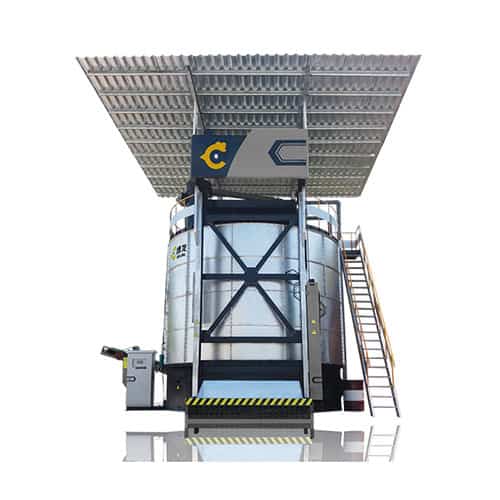
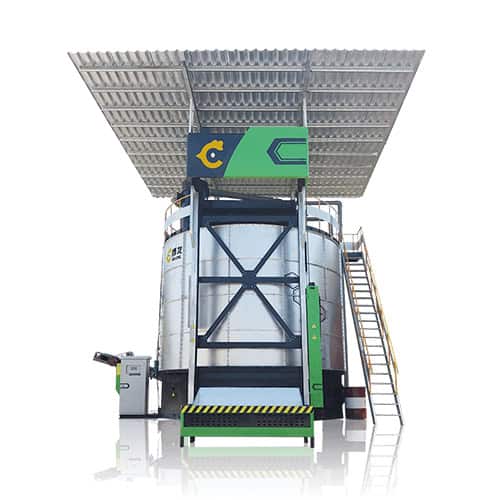
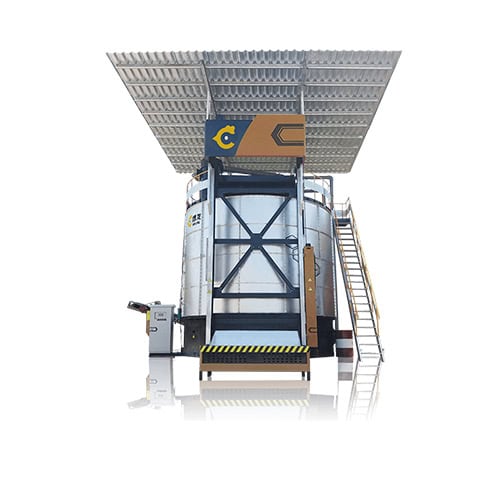
A sealed manure fermentation tank eliminates all three weaknesses by removing the process from outdoor conditions entirely. Inside the tank, manure is broken down through high-temperature aerobic fermentation. Internal temperatures are consistently kept high — hot enough to dramatically accelerate decomposition and support pathogen breakdown, regardless of the weather outside.
An automatic control system continuously manages temperature, aeration and mixing, converting raw manure into stabilised compost in around 7 days instead of 60. As the tank is fully enclosed, a built-in odour control process — combining ammonia-water absorption, activated carbon filtration and odour-consuming microorganisms — captures gases before they reach the surrounding air. This addresses the odour complaints that open composting cannot control. For farms considering their options, this distinguishes a genuine livestock waste composting machine from upgraded windrow equipment.
When lined up side by side, the difference between the two methods is clear. Open windrow composting takes 60 days or more to complete a cycle, whereas an enclosed fermentation tank finishes the same process in around 7 days. Windrows require large, open plots of land, whereas a sealed tank has a small vertical footprint. Windrows are fully exposed to the elements, so output fluctuates with the weather. In contrast, a sealed tank’s internal conditions remain consistent regardless of external conditions. Odour escapes freely from open piles, whereas a sealed tank’s built-in odour control system prevents gases from reaching the surrounding air. Windrows depend on manual or tractor-based turning, whereas a tank runs on automated control with far less daily labour.
The difference is significant — it’s a different category of livestock waste composting machine for farms that have outgrown windrow-scale methods.
The environmental case is straightforward: high-temperature aerobic fermentation can destroy up to 99.9% of pathogens, producing biosecure output rather than leaving raw, untreated manure in the open. The built-in heat exchanger warms incoming air using exhaust heat, reducing the energy needed to sustain fermentation temperatures — a significant saving for farms with continuous equipment operation.
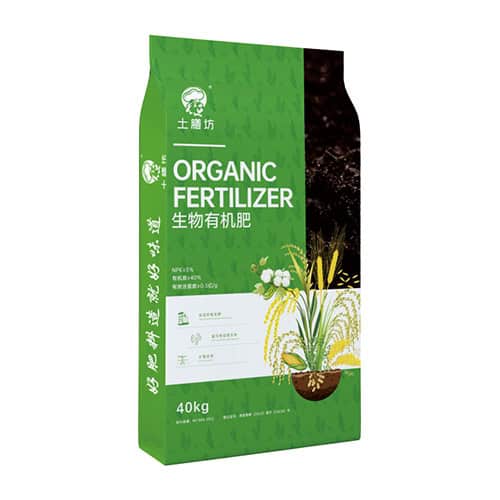
This shifts manure from being a cost centre to being a revenue opportunity. Rather than paying to manage or dispose of waste, farms can produce a consistent supply of organic fertiliser, which is particularly relevant given the increasing interest in soil recovery across Argentina’s soybean-dominated provinces. A livestock waste composting machine transforms a regulatory obligation into a product that farms can use on their own land or potentially sell to meet this demand.
This type of livestock waste composting machine fits large cattle feedlots processing high daily manure volumes, poultry operations dealing with concentrated waste in enclosed housing, dairy farms managing continuous manure output year-round, and mixed farms handling multiple waste streams — manure, bedding, and agricultural residue — through a single system rather than separate processes for each.
Bolong has been developing livestock waste treatment technology since 1993, with its livestock waste composting machine already operating on farms across Vietnam, Russia, Spain, Malaysia, the USA, and numerous provinces throughout China. Tanks are engineered for durability under continuous operation, and the fully automated production process ensures consistent build quality across every unit — factors that matter for farms investing in equipment meant to run for years, not seasons.
1、How do I choose the right size livestock waste composting machine for my farm?
Sizing depends primarily on daily manure output, which is driven by herd size and housing type. Feedlots with higher daily volumes typically need larger or multiple tank units to keep processing capacity ahead of generation, rather than falling behind during peak periods.
2、Does this equipment work in both humid and dry regions of Argentina?
Yes. Because the tank is a fully enclosed system, it performs consistently whether installed in the humid Pampas region or drier western provinces, since internal conditions are controlled mechanically rather than relying on outdoor humidity or rainfall.
3、Can the finished compost be sold to other farms, or only used internally?
The consistent, biosecure output from high-temperature aerobic fermentation is suitable for both on-farm use and external sale, particularly given the growing interest in organic fertilizer among Argentina’s soybean-growing provinces.
Contact Bolong to discuss a livestock waste composting machine sized and configured for your feedlot, dairy, or mixed operation in Argentina.