|
Dr. Vincent GuyonnetWe extend our gratitude to Dr. Vincent Guyonnet, Invited Researcher at the Faculty of Veterinary Medicine, University of Montreal, Canada, and Global Coordinator for Poultry Health and Production at WVEPAH, for his article published in Egg Industry magazine. As a world-leading manufacturer of high-temperature aerobic fermentation tanks, Bolong has earned global recognition. |
Technology is available that not only addresses concerns about usingpoultry manure as fertilizer but also helps to reduce the egg sector’s carbon footprint.
Reducing the production of synthetic nitrogen fertilizerswould appear to be a promising mitigation strategy, withchicken manure available as an attractive substitute.The use of this low-cost natural fertilizer is wellrecognized for its positive effects on the growth andyield of various crops and its long-term beneficialimpact on soil structure, water holding capacity andbiological activity. However, the widely used dryingmethod with huge piles of manure kept for severalmonths, hopefully under a cover, prior to applicationonto fields introduces many risks to crops with bacteria,viruses, larvae and antimicrobial residue molecules onlyinconsistently destroyed during composting.
Many national producer organizations and eggcompanies have already committedto becoming carbon neutral within the next 25 years.However, few have identified the means for eggfarmers to achieve this, particularly considering about75% of the sector’s greenhouse gas emissions are linkedto the production of feed ingredients. These emissionsare allocated to the carbon footprint of eggs, despiteegg farmers typically having no control over how theseingredients are produced, for example the selection offertilizers applied to fields.The use of synthetic nitrogen fertilizers accountsfor about 10.6% of the global emissions of agriculture’sgreenhouse gases, with 39% attributed to their production,2% to their transportation and 58% to their application.
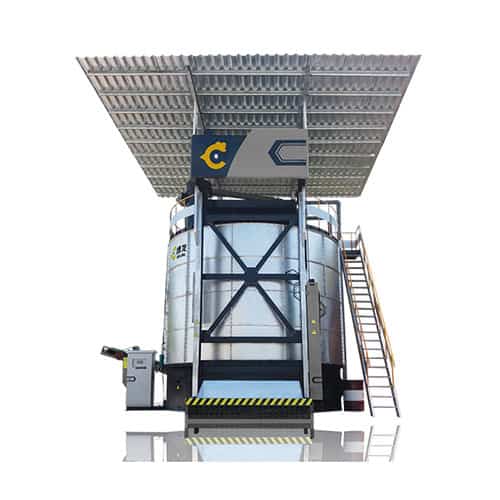
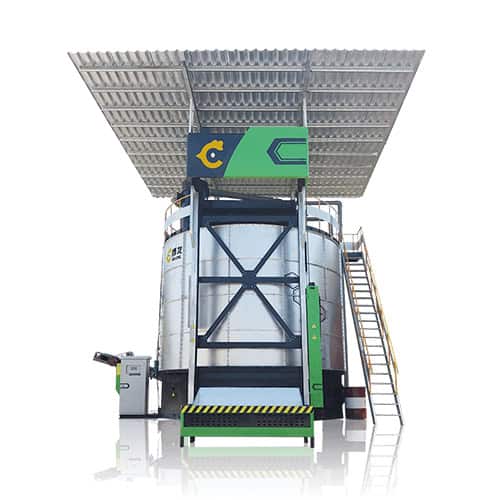
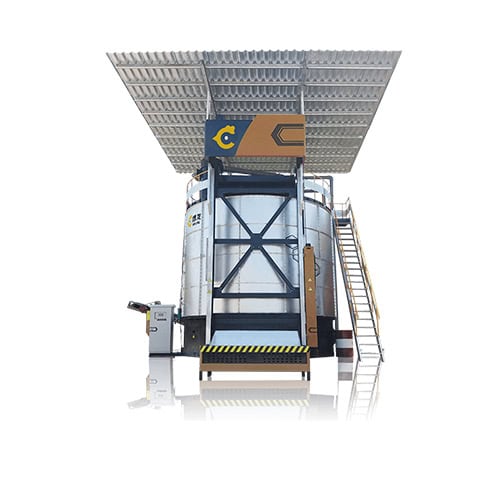
Farmers have been reluctant to apply chicken manureon fields for fear of contaminating their crops and beingthe source of foodborne illness outbreaks and massivefood recalls. In addition, large amounts of manure alsoattract flies, generate odors and negative views about egg farming in local communities and promote anaerobic fermentation, a process that generates greenhouse gases.Under this traditional composting process, manureaccounts for about 20% of the egg sector’s total emission.New manure treatments are available that address allfarmers’ objections. A vertical tank serves as the vessel forthe aerobic fermentation process, generating sufficient heatand internal temperature to destroy all pathogens presentin manure, antimicrobial residues and fly larvae.

Loaded from the top, the manure turns into organic compost over 7 days, with huge blades inside the tank moving it slowly toward the bottom. An automated system controls the injection of oxygen into the tank for optimum composting with the removal and deodorization of gases, such as ammonia and hydrogen sulfide.
This vertical fermentation process reduces the methane and ammonia emissions by over 90% while increasing the carbon fixation rate of the compost, inother words making more carbon available to plantswith less released into the air as carbon dioxide. Otherbenefits of this new technology, compared to the tradi-tional piling of manure, include a smaller footprinton farm, no risk of ground water contamination and aregular source of income for farmers through the sale ofthis natural fertilizer.

Better control of the chicken manure fermentationprocess has a two-fold effect on reducing greenhousegas emissions: fewer direct emissions from manure,along with lower emissions from feeds through the partial replacement of synthetic fertilizers. To meet their zero-emission objective by 2050, eggfarmers have two options: either wait for more researchon carbon capture, utilization and storage and hope forthe best, or start investing in available tools and tech-niques, such as one that turns manure into a green inputfor farming.
Green manure may also serve as the linchpin of theegg sector for its transition to the circular economy, amodel recently encouraged by governments and favored by consumers.