In the livestock industry, manure management is about more than just having the right equipment. It’s a practical long-term challenge.
Can a stable, efficient and compliant organic fertilizer compost tank system consistently process and convert the daily manure output into valuable products?As farms grow in size, processing capacity gradually becomes the main factor in determining the feasibility of using organic fertilizer compost tanks.

Many farms overlook the most fundamental step before selecting organic fertilizer compost tanks: accurately assessing daily output.
Common scale examples:
Laying hen farm (10,000 birds): Approx. 1-2 tonnes of chicken manure per day.
Laying hen farm (50,000 birds): Daily manure output reaches 5-6 tons.
Swine finishing farm (10,000 pigs): Daily pig manure output typically exceeds 20 tonnes.
Once the daily manure output reaches this tonnage range and continues to grow, the treatment system must evolve from temporary solutions to continuous production units. At this stage, a professional organic fertilizer compost tank is no longer optional-it is essential.
Open-air or semi-enclosed composting may be suitable for small volumes, but problems can arise quickly as output increases.
Excessive pile volume leads to an imbalance in heat distribution. While the surface may appear decomposed, the core remains ‘raw material’. If the frequency of turning lags behind the feed rate, odour, leachate and environmental risks will escalate simultaneously.
The inevitable outcome is the accumulation of manure and uncontrollable processing cycles. A well-designed organic fertilizer compost tank can address these issues systematically.
“Centralized processing” logic, which entails building up a batch before unified treatment, is the foundation of many solutions.
Large-scale farms, however, produce livestock manure on a daily basis, have little room for storage, and run the risk of compounding during hot weather, rainy seasons, and environmental inspections.
Intermittent processing eventually loses its effectiveness when daily output surpasses 10 tons. For large-scale production, only organic fertilizer compost tanks with continuous processing capabilities can offer a genuinely industrial-grade solution.

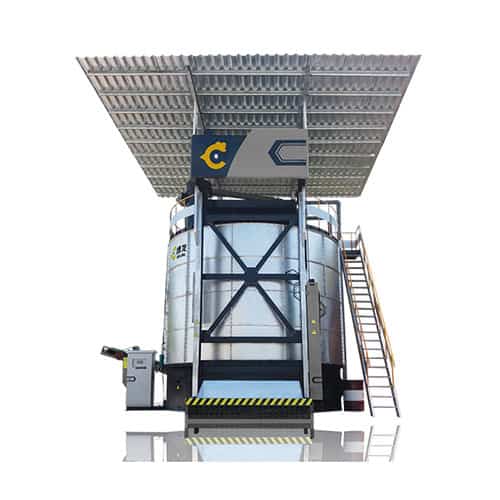
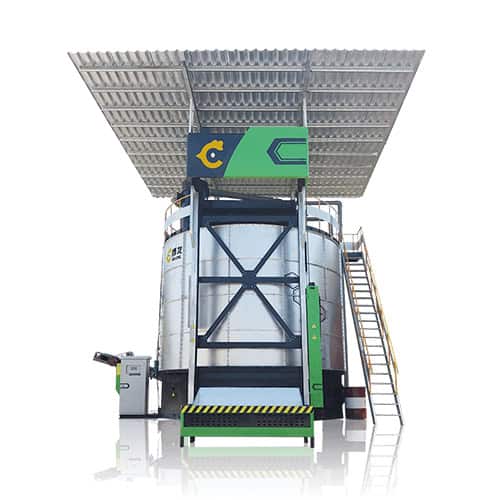
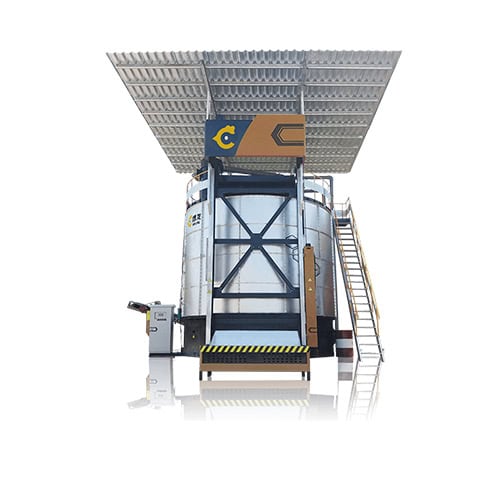
For example, the design philosophy behind Bolong’s organic fertilizer compost tank prioritises not just “speed”, but building a complete system centred on continuous daily operation. The core advantages of organic fertilizer compost tanks include:
It supports daily metered feeding. Once the initial fermentation cycle in the tank is complete, continuous daily feeding and discharge can occur to prevent a backlog of raw materials.
It ensures uniform heating of materials, with every section undergoing effective high-temperature treatment at 60-70°C to eliminate under-fermented material.
It effectively manages high daily output by controlling ammonia emissions, leachate contamination and odour dispersion.
This organic fertilizer compost tank system has been designed specifically for large-scale, continuous-production livestock operations.
In large-scale farming, the focus of manure treatment has shifted from ‘can it be processed’ to ‘can it sustainably match increasing daily output’.
Once daily output becomes the norm, only organic fertilizer compost tanks designed for continuous operation, high-load stability and compliant output can prevent the need for repeated remedial action and reactive upgrades further down the line.
If you’re looking for a long-term, stable and profitable solution for your growing daily livestock manure output, professional-grade treatment equipment such as organic fertilizer compost tanks is worth considering. Click here to find out more!